
Among the most significant tools used in the field of electrical engineering are single-line diagrams, which give a simplified visual expression of the flow of power through an electrical system. Contrary to detailed wiring diagrams, single-line diagrams are a standardized version of depicting complex components in a concise and easy-to-understand manner. Circuit Breaker Symbol is among the symbols that are very important since they identify the points of protection, isolation, and fault interruption. The knowledge of reading these symbols properly is a requirement for engineers, designers, technicians, and inspectors operating with low and medium-voltage systems.
What Is a Single-Line Diagram
A single-line diagram, sometimes shortened to SLD, is a simplified diagram that is used to describe a three-phase electrical system as a single line. As opposed to displaying all conductors, it dwells upon the key elements like transformers, circuit breakers, busbars, and loads. An SLD is meant to be used to demonstrate system structure, power flow, and protection coordination as opposed to physical wiring details. Circuit breaker symbols on such diagrams signify protection and control of various parts of such a system.
Identifying Breaker Types in Single-Line Diagrams
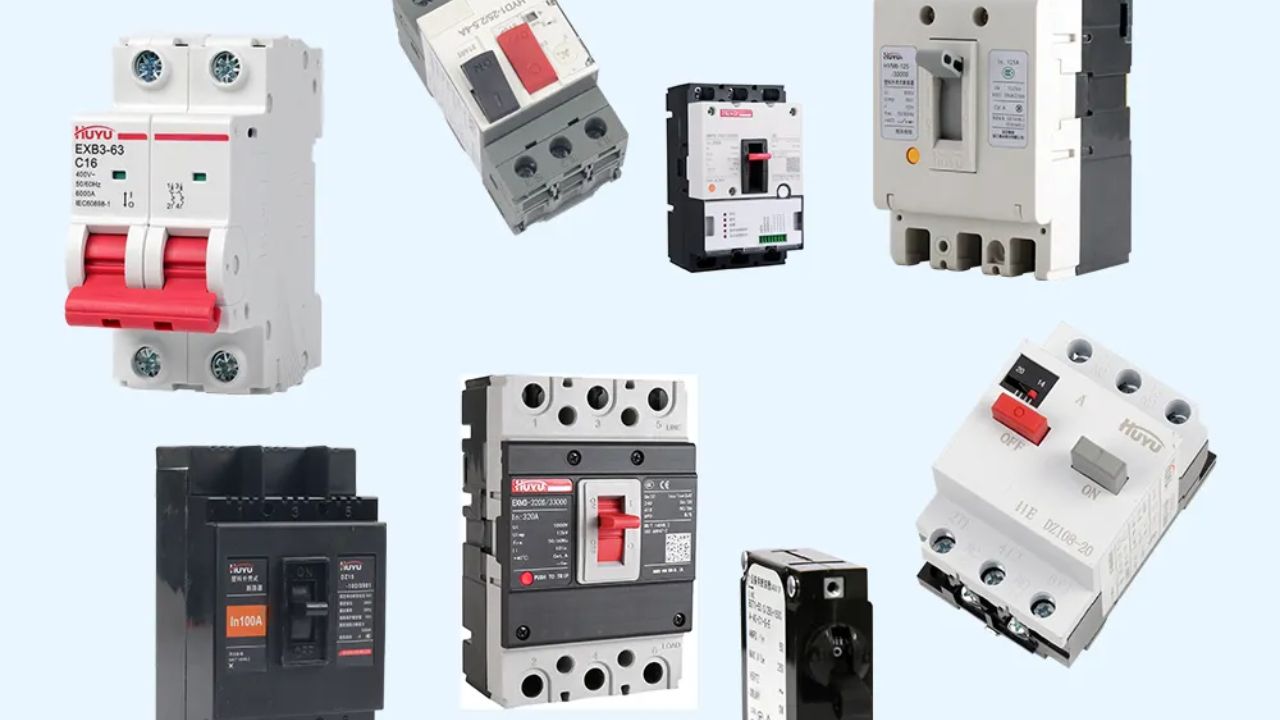
Correct reading of a circuit breaker symbol involves determining the kind of breaker in use. Branch circuits typically have miniature circuit breakers that are typically depicted by smaller and simpler symbols. Molded case circuit breakers will have bigger rectangular symbols and are normally installed at feeder or sub-distribution levels. The air circuit breakers are denoted with more complicated and heavier symbols and are usually placed at the main incomer of a low-voltage panel. The place of the symbol in the diagram is the first hint concerning the functioning and capacity of the breaker.
Understanding Ratings and Annotations
Single-line diagrams that include circuit breaker symbols are nearly always given text annotations. Such annotations give vital information like the current rating, the number of poles, and even the breaking capacity. As an example, the label of a circuit breaker, such as MCCB 3P 250A, means that the circuit breaker is three-pole, molded case, and is 250 amperes. The symbol alone would not be enough to get the complete picture of the level of protection offered without these markings. The correct interpretation of a symbol and the text that accompanies it requires reading.
Direction of Power Flow and Breaker Placement
The symbol of a circuit breaker on a single-line diagram also has a meaning. As a rule, the flow of power is through the top or left-hand side of the diagram to the bottom or right. Circuit breakers are installed in series along the power path, and the sources and loads are separated. Using each breaker symbol in the line, a reader would be able to comprehend the way power is distributed and at what point it could be broken. This is more so in the troubleshooting process or system expansion planning.
Standards and Symbol Variations
Various standards have an effect on the appearance of circuit breaker symbols on a single-line diagram. The symbols of the IEC-style diagrams are minimal, functional, and focus on clarity and consistency. ANSI-based diagrams in widespread use in North America tend to have more descriptive elements and textual referencing, including CB or a device number. Although the graphical style might vary, the basic objective of the symbol is the same. To prevent misinterpretation, engineers dealing with international projects should be conversant with both conventions.
Common Interpretation Mistakes
A frequent error made during the reading of single-line diagrams is believing that all the symbols of the breakers are of the same protection level. As a matter of fact, the breaker type, rating, and location dictate the role of the breaker in the system. The other mistake that is made is the failure to notice auxiliary information like trip settings or special functions. The error in reading these details may result in wrong assumptions regarding system security or coordination.
Conclusion
One of the basic skills of electrical engineering is to be able to read circuit breaker symbols on a single-line diagram. These signs convey the issues of power protection, control, and dispersion within a system. Knowledge of the fundamental structure of symbols, knowledge of the types of breakers, knowledge of the annotations, and knowledge of power flow all allow professionals to analyze and operate electrical designs correctly. The effective understanding of these symbols is known not only to enhance the effectiveness of design, but it also promotes safety and reliability in electrical installation.